
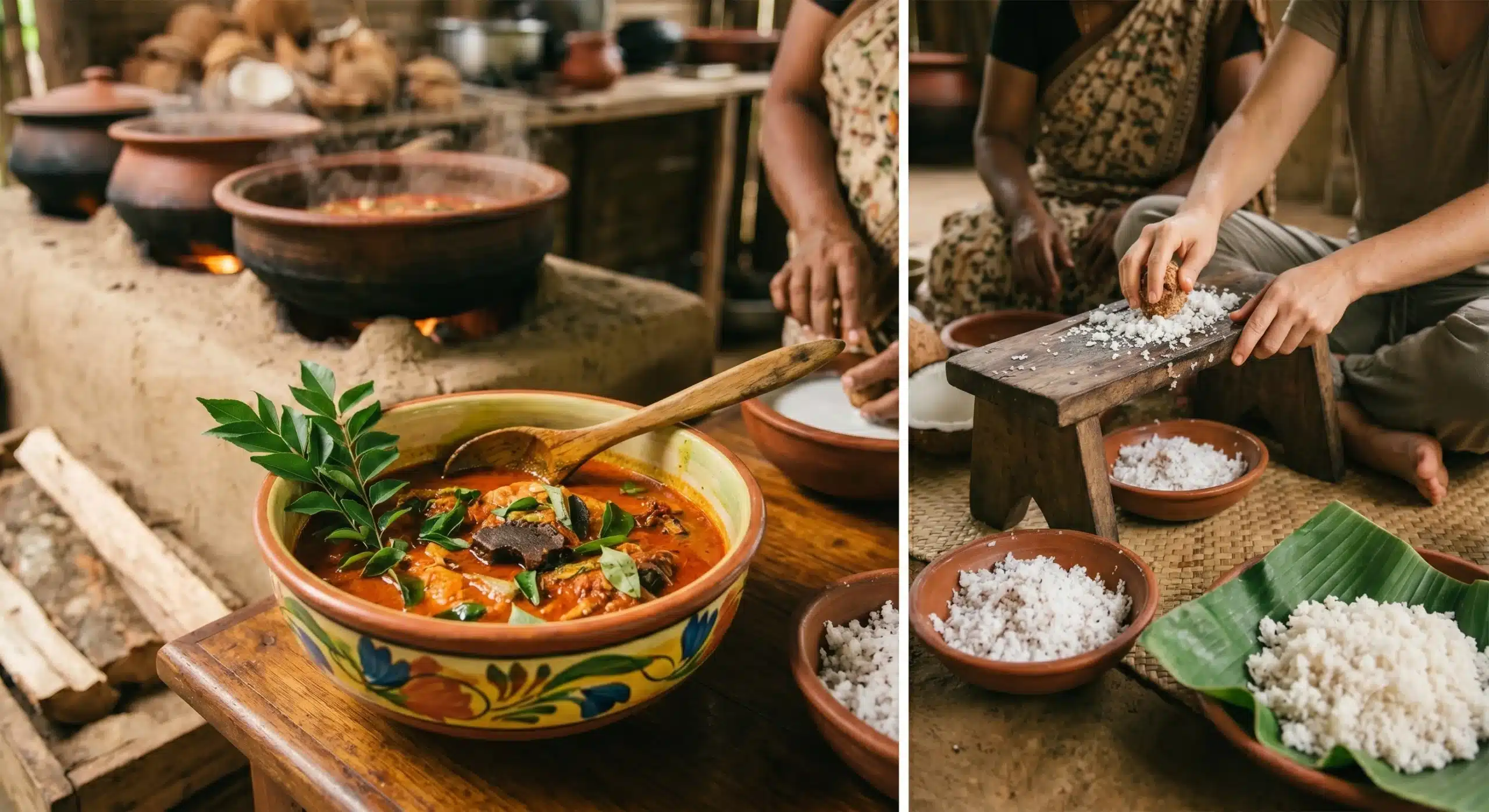
Booking a traditional sri lankan cooking class weligama is the ultimate way to unlock the rich, fiery secrets of island hospitality. Whether you are a solo backpacker or a family chasing new flavors, this hands-on culinary journey transforms how you view food. You will learn to balance roasted spices, scrape fresh coconuts, and simmer unforgettable dishes inside rustic earthenware pots.
A traditional sri lankan cooking class weligama lasts roughly 3 to 4 hours and typically includes a guided market tour, a hands-on kitchen session using wood-fired clay pots, and a shared feast. Most local classes cost between $15 and $45 USD per person, offering an authentic glimpse into Southern Province cuisine.
Key Takeaways
- Hands-on Skills: Master the exact science of spice-roasting and coconut scraping from local families.
- Market to Table: Visit vibrant local markets to select seasonal vegetables and fresh coastal seafood.
- Easy to Combine: Seamlessly bundle your culinary lesson with afternoon surfing or wildlife safaris.
- Dietary Friendly: Classes naturally accommodate vegetarian, vegan, and gluten-free preferences.
Why Weligama is Sri Lanka’s Culinary Capital for Travellers
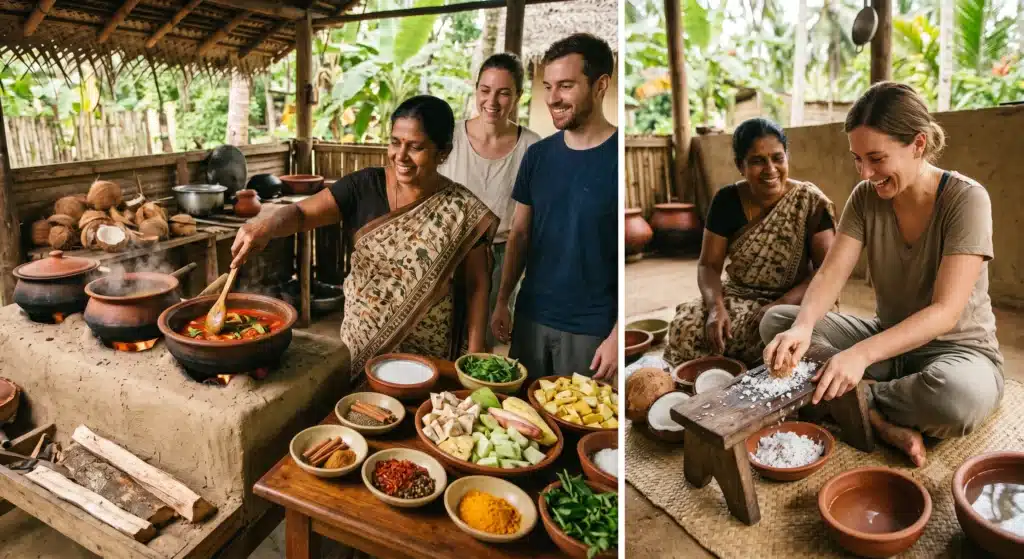
Weligama is globally famous for its sandy crescent bay and beginner-friendly surf breaks. However, this coastal town also serves as the beating heart of Southern Province cuisine. The unique geography allows local home cooks to merge treasures from the Indian Ocean with fresh inland produce.
For over ten years, our team at Oura Travel has curated bespoke Sri Lanka tours. We consistently find that food connects people deeper than regular sightseeing. Food acts as a cultural bridge. When you sit in a local kitchen, you are not just a customer; you become a welcomed friend.
Our professional opinion is that southern food outshines northern variations in its bold use of goraka (Garcinia quaesita). This dried, sour fruit gives southern seafood curries an intense, smoky depth. You simply cannot replicate this flavor profile using commercial paste or modern aluminum pans.
Step-by-Step: What Happens Inside a Weligama Kitchen?
1. The Bustling Market Expedition
Your experience begins far away from the stove. You will wander through the vibrant open-air stalls of the Weligama market alongside your host. The atmosphere is an explosion of color, sound, and scent.
Your guide will teach you how to choose the firmest green papayas, bright banana blossoms, and ripe jackfruit. You will learn to recognize real Ceylon cinnamon by its fine, multi-layered quills. This experience beats wandering alone because a local expert handles the bartering and explains forgotten heirloom vegetables.
2. The Art of Traditional Coconut Prep
Coconut is the lifeblood of Sri Lankan gastronomy. In fact, an old island proverb suggests that a kitchen without coconut is a kitchen without a soul. You will sit on a traditional low wooden bench equipped with a serrated metal grater blade, known locally as a bready.
Scraping coconut requires a rhythmic, rocking motion. It looks simple when a local grandmother does it, but it takes a bit of coordination! After shredding the snowy meat, you will squeeze it by hand with warm water. This process creates thick, velvety first-milk and lighter second-milk used to balance different cooking stages.
3. Mastering the Clay Pot and Wood Fire
Authentic cooking here relies on clay pots (mati walan) heated over coconut-shell fires. Clay is porous, which allows heat and moisture to circulate perfectly. This slow-simmering process creates an entirely different texture.
You will grind whole black peppercorns, cardamom, and mustard seeds on a heavy stone slab. The intense aroma hits your nose immediately. Your host will show you exactly when to drop fresh curry leaves into sizzling coconut oil so they release their essential oils without burning.
+---------------------+-----------------------------------+------------------------------------+
| Dish Name           | Key Ingredients                   | Flavor Profile                     |
+---------------------+-----------------------------------+------------------------------------+
| Fish Ambul Thiyal   | Fresh Tuna, Goraka, Black Pepper  | Sour, smoky, and intensely dry     |
| Parippu (Dhal)      | Red Lentils, Coconut Milk, Cumin  | Creamy, mild, and comforting       |
| Pol Sambol          | Shredded Coconut, Chili, Lime     | Zesty, spicy, and fiercely fresh   |
| Gotu Kola Mallum    | Pennywort, Green Chili, Coconut   | Clean, peppery, and highly herbal  |
+---------------------+-----------------------------------+------------------------------------+
How Can I Choose the Best Traditional Sri Lankan Cooking Class Weligama Options?
Finding the right host depends heavily on your specific travel style and accommodation location. Fortunately, Weligama hosts several highly-rated family kitchens that welcome international visitors with open arms.
- Priya Dream Kitchen: Run by a warm mother-and-son duo in a gorgeous open-sided garden kitchen. It feels exactly like cooking with family.
- Karu’s Kitchen: Famous for explaining the historical trade-route influences on local spices. Great for history buffs.
- Ceylon Clay Kitchen: Located closer to the peaceful inland paddy fields, perfect for combining food with rural scenery.
If you are staying in luxury properties like Cape Weligama, you can easily venture into the nearby UNESCO World Heritage site of Galle Fort for exclusive masterclasses. No matter which venue you select, your host will customize the spice levels to suit your palate.
Practical Guide for Culinary Travellers in Sri Lanka
Best Time to Visit and Weather Considerations
Weligama welcomes food lovers all year long, but the dry season runs from October to April. During these months, the blue sky mirrors the ocean. If you visit during the monsoon season between May and September, do not worry. The heavy afternoon showers provide the perfect excuse to hide away inside a cozy, rain-scented kitchen.
Cultural Etiquette and Dress Codes
Most cooking classes are hosted in family homes or garden pavilions. You should dress comfortably because kitchens get hot. However, keep clothing modest out of respect for local traditions.
If your food journey takes you near sacred spaces, remember your manners. For instance, always remove your shoes before entering local homes. If you plan to visit a Buddhist temple before or after your class, you must cover your shoulders and knees. Never pose for photos with your back turned directly toward a Buddha statue.
Visa and Safety Basics
All international visitors must secure an electronic travel authorization prior to arrival. You can easily apply through the official Sri Lanka Government e-Visa Portal. Ensure your passport remains valid for at least six months from your arrival date.
Sri Lanka is an incredibly safe and welcoming destination for families and solo female travellers. When eating street food or drinking water, always opt for filtered or bottled water to keep your stomach happy.
Crafting Your Ultimate South Coast Day Excursion
Say you land in Colombo on a Tuesday morning, ready to dive straight into paradise. Instead of rushing across the island, you can head south via the convenient coastal highway. You can easily craft an incredible itinerary by mixing food, wildlife, and history.
Our popular Day Excursions make planning effortless. You can begin your morning searching for marine giants with a Mirissa snorkelling and whale watching excursion. After your boat returns to the harbor, you can head straight into your afternoon cooking class to chop, stir, and feast.
The next day, you can continue your exploration by booking a Galle day with turtles tour to see historic ramparts and conservation projects. This balanced approach ensures you never get bored of doing just one activity.
Frequently Asked Questions
What is the average cost of a cooking class in Weligama?
Most authentic, family-run cooking classes cost between $15 and $45 USD per person. This price comprehensively covers your market tour, all raw ingredients, refreshing local drinks, and the multi-course meal. High-end luxury resort classes will cost more.
Can vegetarian or vegan travellers participate?
Yes, absolutely. Sri Lankan cuisine is a paradise for plant-based eaters. The vast majority of traditional side dishes rely entirely on vegetables, lentils, and coconut milk. Simply inform your host about your dietary preferences before the class begins.
How many days should I spend in the Weligama area?
We highly recommend staying between 3 to 5 days along the southern coast. This gives you ample time to catch pristine surf waves, join a cooking school, visit Galle Fort, and relax without feeling rushed.
Is it safe to eat the food cooked over wood fires?
Yes, it is completely safe. The high cooking temperatures inside clay pots ensure all food is thoroughly prepared. Local hosts maintain clean, hygienic home kitchens and take great pride in serving immaculate meals to international guests.
Plan Your Dream Custom Journey with Oura Travel
At Oura Travel, we do not believe in cookie-cutter vacations. With over 10 years of on-the-ground experience, we know that the best travel memories are made of small, authentic moments like tasting a curry you perfected yourself. Learn more about us and our passion for showing visitors the real heart of our island.
Whether you want to explore the lush tea hills, surf southern breaks, or combine your island stay with an extension to the Maldives, we handle every detail. Our local drivers, comfortable vehicles, and 24/7 support guarantee a stress-free escape.
Are you ready to taste the real Sri Lanka? Contact Oura Travel today to design your custom itinerary.
Related reading
This is one of a series on eating and cooking in Sri Lanka. For the wider picture, see our guide to the best food experiences in Sri Lanka, and if you are still choosing a class, our guide to picking the best cooking class in Sri Lanka.